Cartly: checkout redesign
Cartly is an e-commerce platform serving 800K monthly shoppers. Despite strong traffic, checkout was quietly losing revenue — users were getting close, then leaving. I was brought in to find out why and fix it.
The problem
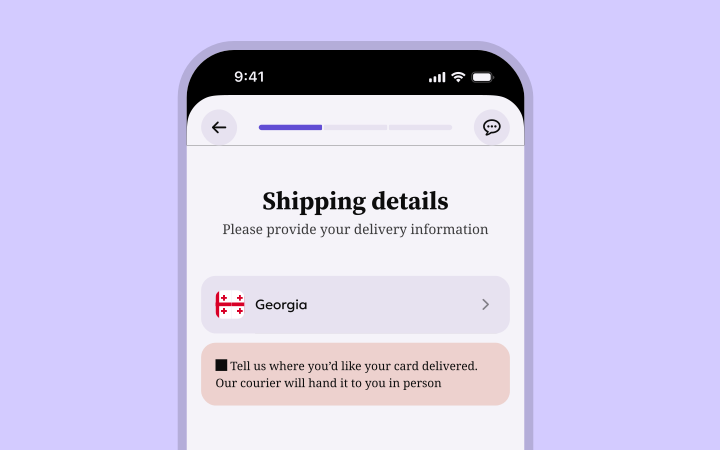
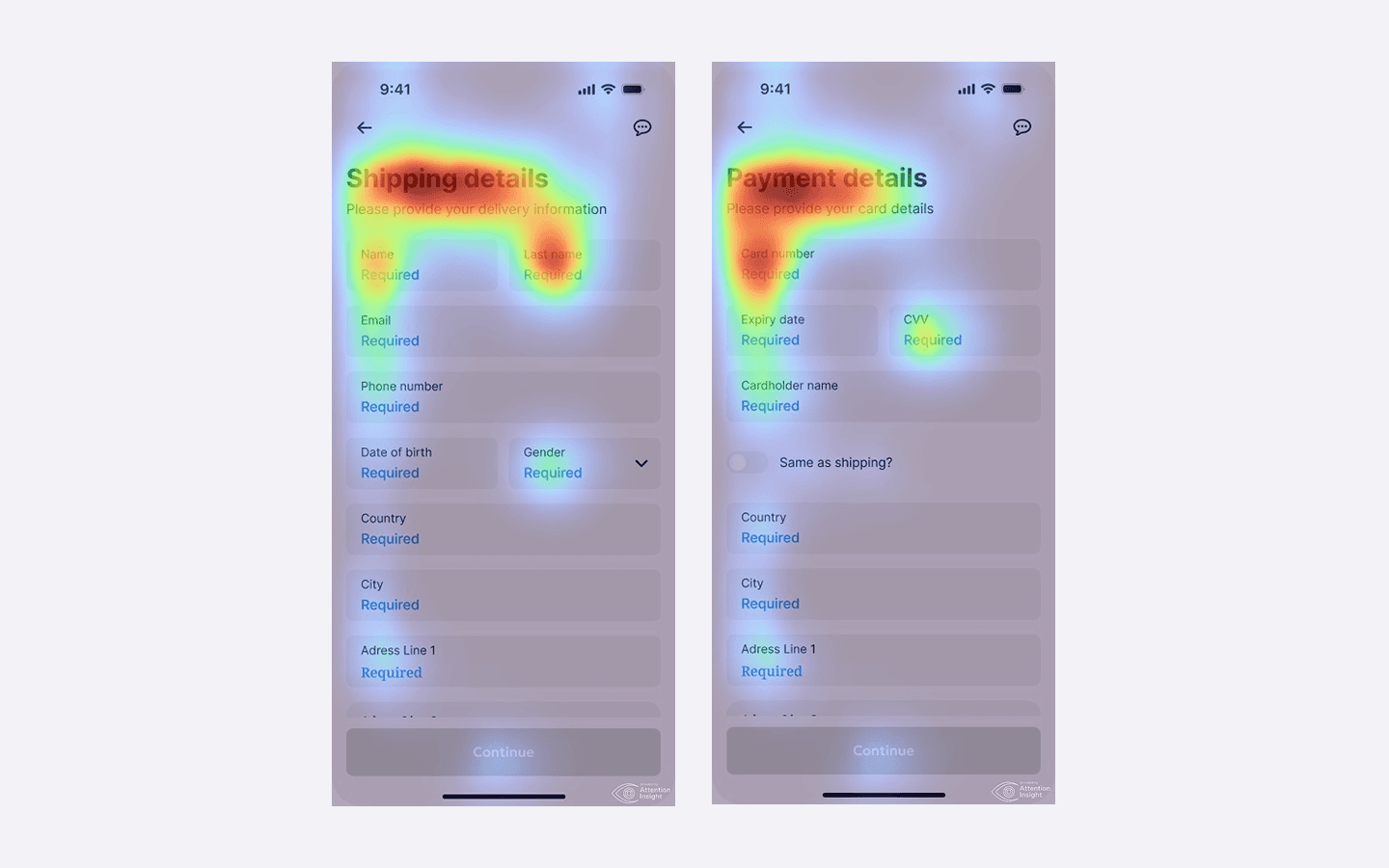
The checkout had grown organically over 3 years. Six steps, 23 form fields, two forced account walls. Users weren't confused — they were exhausted. Session recordings showed a slow bleed across every step, with the sharpest drop-off right after shipping details, when users first saw how many steps remained.
Before / After
The checkout had grown organically over 3 years. Six steps, 23 form fields, two forced account walls. Users weren't confused — they were exhausted. Session recordings showed a slow bleed across every step, with the sharpest drop-off right after shipping details, when users first saw how many steps remained.
Before
After
Process
Eight weeks, four phases, one core question: why are people leaving right before they pay? I started by mapping every state of the existing flow, talked to real users who had abandoned checkouts, explored three design directions, and tested them before committing to anything. The result shipped in week 7.
Solution
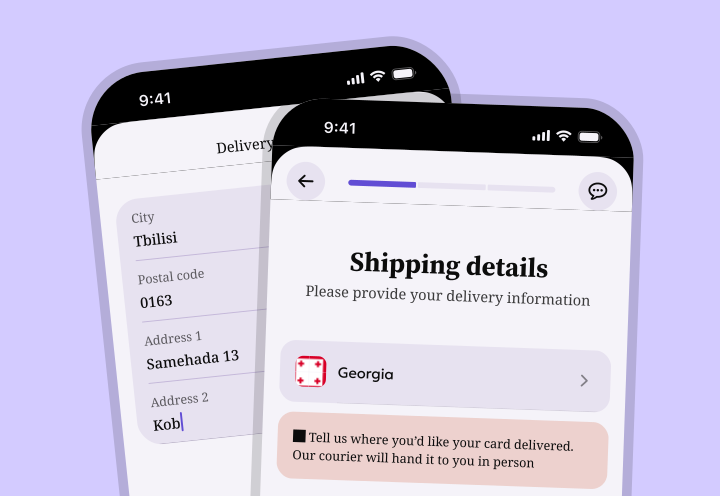
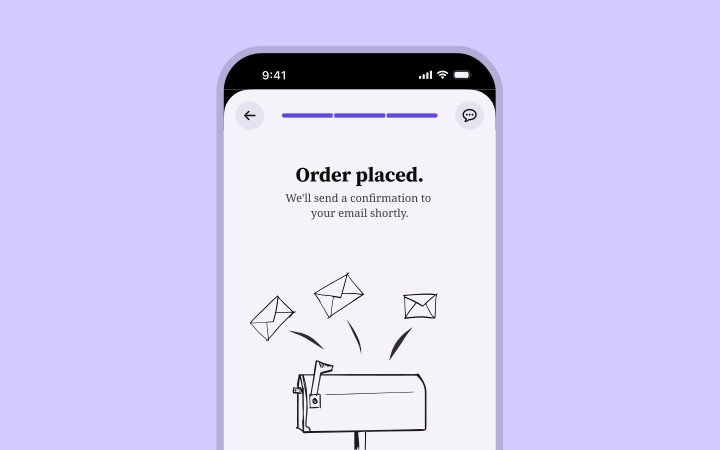
The core insight was that users couldn't see the end from where they were standing. The fix was architectural — collapse six steps into three, make the order always visible, and move account creation to after purchase.
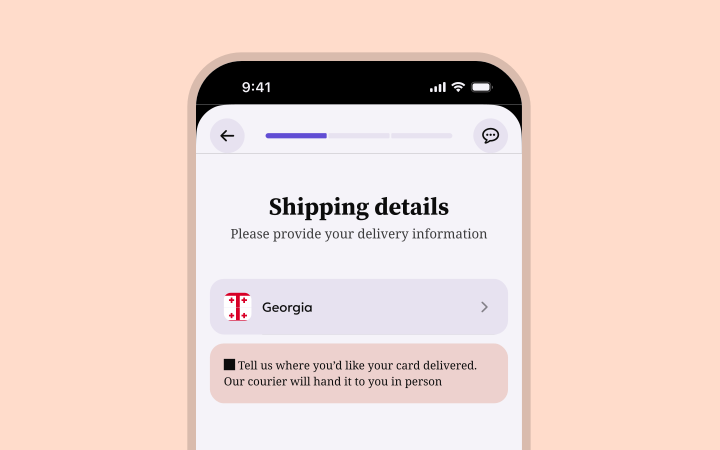
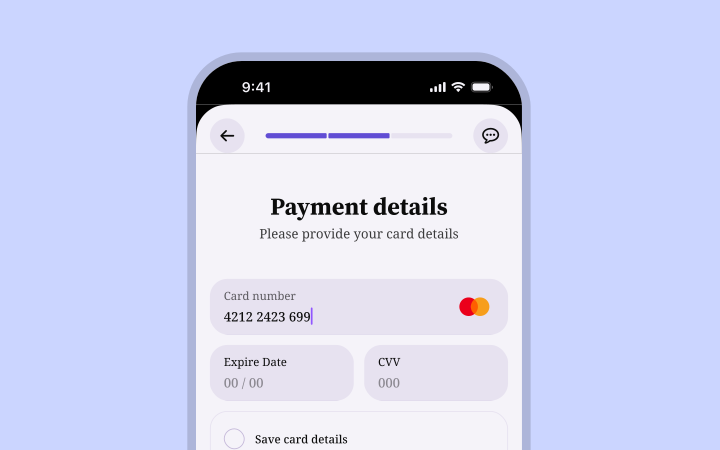
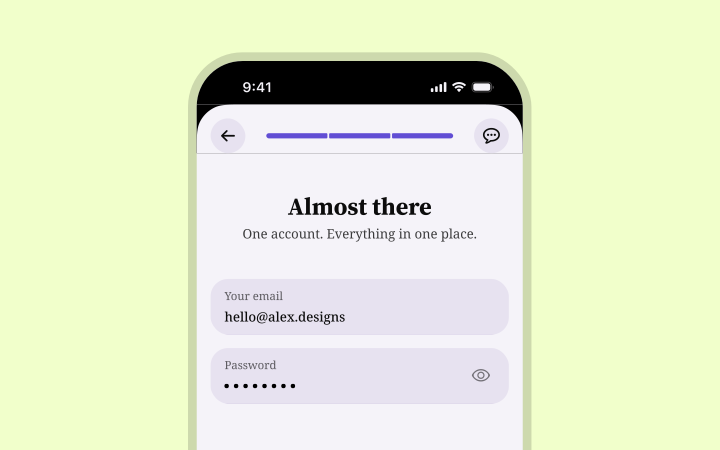
Billing defaulted to match shipping, removing 9 redundant fields instantly. A sticky order summary kept users anchored to what they were buying. A percentage-based progress indicator replaced "Step 2 of 6" — users moved faster without noticing why.
CEO, Cartly
"The checkout redesign gave us the biggest single conversion lift we've ever seen. Alex just gets it."
Takeaways
Friction is emotional, not just functional
Users weren't dropping off because checkout was hard. They abandoned because it felt long before they even started.
Remove the force, increase the choice
Moving account creation post-purchase didn't just reduce abandonment — it actually increased sign-ups from 11% to 18%.
Visibility is a trust mechanism
A persistent order summary was the highest-ROI single component — one element contributed to nearly half the mobile conversion lift.